
Toroidal LED displays represent a significant advancement in modular visual systems. Unlike conventional flat panels, these displays offer curved, ring-shaped designs that capture attention and enhance viewer engagement. However, achieving optimal performance in toroidal LED displays requires careful consideration of both energy efficiency and brightness. Designers and engineers must balance luminous output, power consumption, and thermal management to ensure sustainable operation. This balance is critical because high brightness levels often demand more energy, which can increase heat generation and reduce long-term reliability. Therefore, understanding the interaction between LED materials, driver systems, and structural design is essential for delivering top-tier visual performance while controlling operating costs.
Modern toroidal LED displays are applied in stadiums, retail spaces, event venues, and corporate installations. Each environment presents unique lighting conditions and operational requirements. For instance, outdoor stadiums demand high brightness to overcome ambient sunlight, while indoor retail environments prioritize color consistency and energy efficiency. Therefore, optimizing brightness and efficiency is not only a technical challenge but also a functional necessity. Engineers must consider pixel density, LED type, driver efficiency, and thermal management strategies to achieve a display that meets both visual and operational standards.
The selection of LEDs is the foundational factor in balancing energy consumption and brightness. High-efficiency LEDs convert more electrical power into visible light and generate less heat. This characteristic is particularly important in toroidal LED displays, where densely packed modules increase thermal load. Engineers typically select LEDs with high luminous efficacy, low forward voltage, and stable color output across various operating temperatures. These choices directly impact the overall energy consumption of the display.
Additionally, the spectral characteristics of LEDs affect both perceived brightness and power efficiency. LEDs that produce light closer to the peak sensitivity of human vision appear brighter at lower energy levels. This principle allows designers to achieve visually impactful displays without excessive power draw. Consequently, the careful selection of LED materials and wavelengths contributes significantly to the operational efficiency of toroidal LED systems.
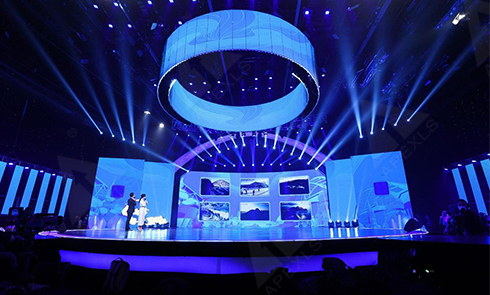
Pixel density determines how many LEDs are packed within a given area of the display. Higher pixel density improves image clarity but increases power requirements. Toroidal LED displays often feature curved configurations that magnify visual effects, making uniform brightness critical. Uneven pixel spacing or mismatched LED output can create noticeable hotspots or dim regions, reducing overall image quality.
To maintain uniform brightness, engineers calibrate each module individually. This process involves adjusting driver currents, fine-tuning color temperature, and ensuring consistent optical output. High-precision calibration helps balance energy consumption with visual performance. As a result, toroidal LED displays achieve both stunning visual clarity and energy-efficient operation, even in complex curved geometries.
Efficient driver systems are essential for controlling energy consumption in toroidal LED displays. These drivers regulate current flow to each LED, ensuring consistent brightness while minimizing wasted energy. Advanced drivers use pulse-width modulation (PWM) or constant current regulation to balance luminous output and efficiency. Furthermore, intelligent drivers can adjust brightness dynamically based on ambient lighting conditions. This feature reduces energy usage during low-light periods without compromising visual impact.
In addition, driver efficiency affects thermal load. Poorly designed drivers generate excessive heat, which increases the need for active cooling and reduces LED lifespan. By employing high-efficiency drivers with low heat generation, engineers improve both energy efficiency and durability. Consequently, power management and driver design are closely linked to the overall performance and sustainability of toroidal LED displays.
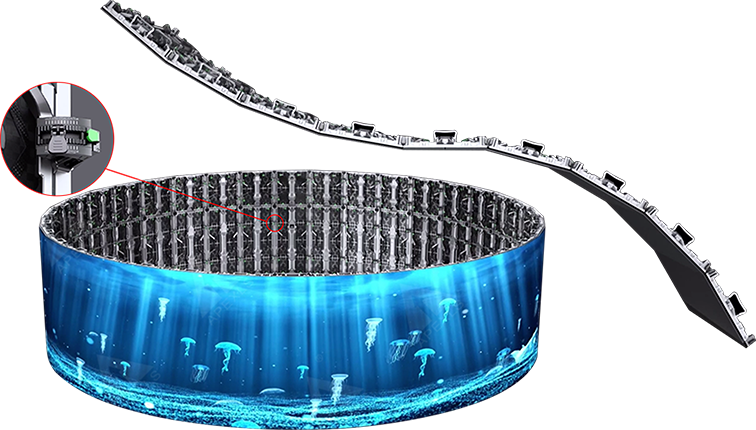
Heat management is critical in toroidal LED displays because excessive temperature reduces luminous efficiency and accelerates LED degradation. Curved structures often limit natural airflow, making thermal design more challenging. Engineers address this issue using a combination of heat sinks, conductive materials, and active cooling systems. Aluminum or copper frames conduct heat away from densely packed LEDs, while ventilation channels or fans dissipate heat into the environment. These strategies maintain optimal operating temperatures and prevent brightness loss caused by thermal stress.
Furthermore, efficient thermal management enhances energy performance. LEDs operating within their ideal temperature range consume less power to maintain consistent brightness. In addition, effective cooling reduces the need for power-intensive compensation circuits, further improving energy efficiency. Thus, thermal design is integral to achieving sustainable operation in toroidal LED displays.
Optical design plays a pivotal role in controlling both brightness and energy efficiency. Toroidal LED displays use lenses and diffusers to direct light uniformly across the curved surface. This approach reduces glare, prevents hotspots, and maximizes the effective luminous output of each LED. By optimizing light distribution, designers achieve higher perceived brightness without increasing power consumption.
Moreover, wide-angle optics allow viewers to experience consistent brightness across various angles. This feature is essential in toroidal displays, where curvature can create visual distortion. Effective optical design ensures that every part of the display contributes to the overall image, enhancing visual performance while conserving energy.
Modern toroidal LED systems incorporate intelligent energy-saving features. These features include ambient light sensors, automated dimming, and content-based brightness modulation. By adjusting luminous output based on environmental conditions, the display minimizes unnecessary energy consumption. For example, indoor installations often reduce brightness during low occupancy periods, while outdoor stadium displays increase output only when required to compete with sunlight.
Content-aware control further improves efficiency. Dynamic scenes with dark backgrounds consume less power, while bright areas demand more energy. By linking LED drivers to content patterns, engineers optimize power usage in real time. This approach allows toroidal LED displays to deliver visually compelling effects while keeping operational costs manageable.
Modular design enhances both brightness control and energy efficiency. Toroidal LED displays consist of interconnected panels that allow selective power management. Engineers can isolate high-demand areas or adjust individual modules to maintain uniform brightness. This modularity also simplifies maintenance, reducing the risk of energy waste caused by degraded or damaged panels. In addition, modular construction facilitates thermal management by distributing heat load evenly across the system. The combination of modularity, power control, and thermal design results in displays that are both bright and energy-efficient.
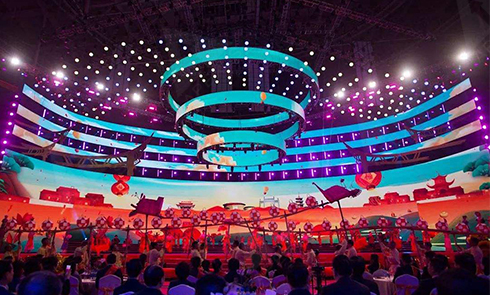
Integration with advanced control systems further enhances efficiency. Modern toroidal LED displays often connect to networked controllers that monitor power, brightness, and temperature. Real-time feedback enables automated adjustments that maintain optimal luminous output while reducing energy consumption. These systems also support predictive maintenance, alerting operators to inefficiencies or thermal anomalies before they affect performance. As a result, the combination of hardware and intelligent software ensures that toroidal LED displays operate at peak performance with minimal energy waste.
Optimizing energy efficiency in toroidal LED displays has significant environmental and economic implications. Lower energy consumption reduces carbon footprint and operational costs, making these displays more sustainable for long-term installations. Furthermore, efficient systems reduce heat generation, lowering cooling requirements and improving overall building energy management. In high-profile venues such as sports arenas, shopping malls, and corporate installations, these benefits combine to provide both visual excellence and financial savings.
Balancing energy efficiency and brightness in toroidal LED displays requires a holistic approach. Engineers must carefully select LEDs, optimize pixel density, employ advanced driver systems, and implement effective thermal management. Optical design ensures uniform light distribution, while intelligent energy-saving controls further reduce power consumption. Modular design and system integration enhance maintainability and sustainability. Ultimately, these strategies allow toroidal LED displays to deliver stunning visual performance without compromising operational efficiency. By addressing both technical and environmental considerations, designers create displays that are visually impressive, energy-conscious, and economically viable.