
For decades, the relationship between architecture and digital display was one of mutual compromise. Screens were rigid, flat rectangles that designers had to “hide” or “embed” into the straight lines of a building. However, the emergence of flexible LED display panels has shattered this physical boundary. By moving beyond the constraints of glass and steel, these pliable modules allow digital media to follow the natural curves of organic design.
Today, architecture is no longer a silent, static observer. Through the integration of flexible LED technology, complex surfaces—such as irregular columns, streamlined walls, and sprawling domes—are transformed into dynamic “Media Facades.” This paradigm shift allows a building to “speak” through vibrant storytelling and “breathe” through rhythmic, ambient animations. This article explores how flexible LED technology bridges the gap between digital content and architectural form.
The history of display technology has been a history of flat planes. From the first televisions to modern stadium screens, the industry prioritized the “Perfect Rectangle.” While efficient for content, this format restricted architects who favored the fluid, parametric curves of modern design.
When architects attempted to install traditional LED panels on curved surfaces, they faced “stepping” effects—visible gaps and jagged edges that ruined the visual continuity. Furthermore, the weight and structural support required for rigid cabinets made installation on streamlined surfaces nearly impossible.
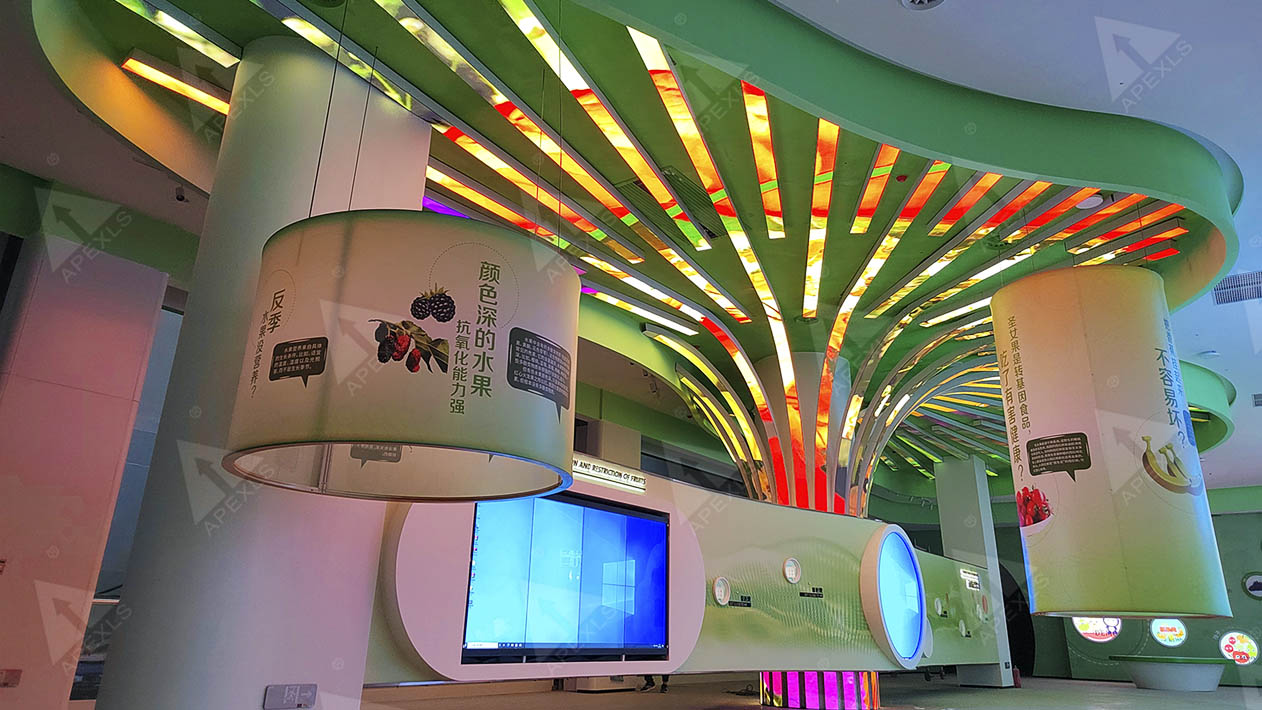
Flexible LED display panels solve these issues by acting as a “Media Skin.” Instead of forcing the building to adapt to the screen, the screen adapts to the building. This flexibility allows designers to wrap digital displays around a 360-degree pillar or trace the undulating wave of a concourse wall, turning every architectural element into a potential storyteller.
What makes a flexible LED display panel “breathe” while maintaining structural integrity? The secret lies in the sophisticated material science behind the module.
Unlike standard fiber-reinforced PCBs, flexible modules utilize high-elasticity FPC (Flexible Printed Circuit) substrates. These materials can be bent, folded, and twisted without breaking the internal electrical traces. Consequently, the display remains functional even when subjected to extreme curvatures.
To achieve a “seamless” look on complex surfaces, these panels often utilize strong magnetic points for mounting. This allows the modules to “snap” onto a pre-installed metal frame that follows the exact contour of the architecture. Because there are no bulky cabinets or heavy frames, the transition from one module to the next is invisible, creating a single, continuous canvas of light.
A typical flexible module weighs significantly less than its rigid counterpart. This lightweight nature is critical for “Dome” or “Ceiling” installations, where adding tons of steel support would be structurally prohibitive. By minimizing the load, flexible panels allow for massive digital takeovers of spaces previously considered “unreachable.”
When a screen follows the shape of a curve, the content becomes part of the geometry. This is where the building begins to “speak.”
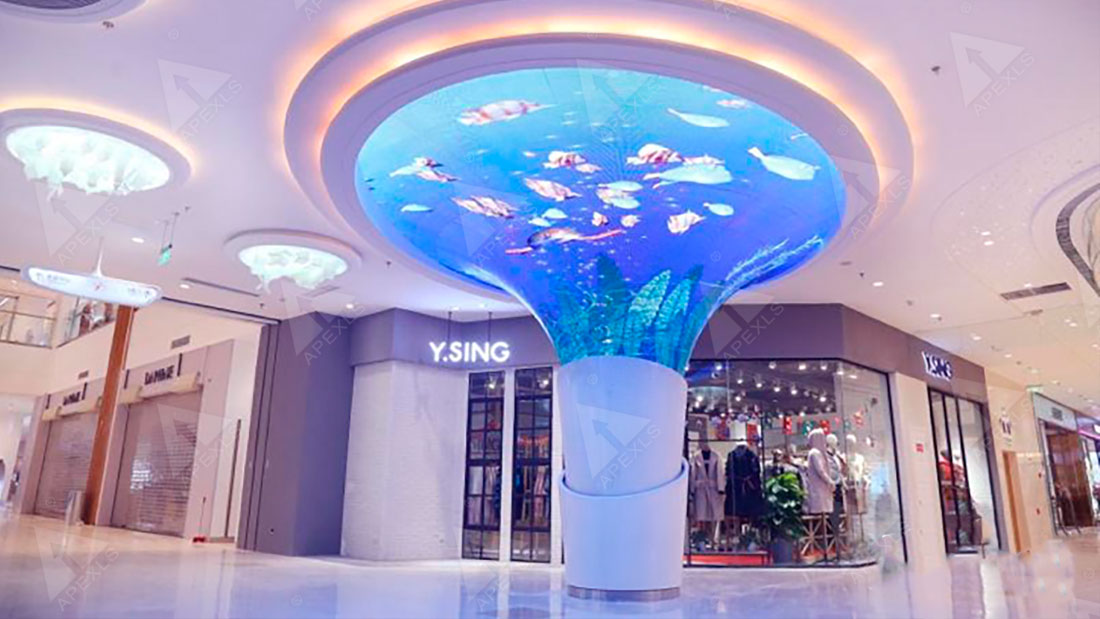
In a luxury hotel lobby or a corporate headquarters, a massive curved pillar wrapped in flexible LED display panels can display a digital waterfall that flows around the structure. As the water “moves” in 360 degrees, it creates a sense of spatial depth that a flat screen could never achieve. The architecture is no longer just holding the content; it is enhancing the content’s physics.
For retail environments, “curved signage” guides the consumer’s eye more naturally than flat boards. A streamlined wall that displays flowing brand narratives can direct traffic flow and influence consumer psychology through subtle, movement-based cues. This is the essence of “speaking” architecture—a space that communicates its purpose through its very skin.
Beyond displaying pre-recorded video, flexible LED surfaces allow a building to exhibit “Organic Behavior,” a concept often described as a building that “breathes.”
Using real-time data or generative art, flexible LED walls can mimic biological rhythms. A dome in a transit hub might pulsate slowly with deep blue light during low-traffic hours and shift to vibrant, rapid energy during peak times. This rhythmic change creates a psychological connection with the occupants, making the cold materials of the building feel alive and responsive.
Modern flexible LED display panels can be integrated with external sensors. Imagine a streamlined facade that “ripples” like water whenever the wind blows outside, or a ceiling that changes its color temperature to match the actual sky above the roof. This real-time interaction turns the building into a living organism that reflects its environment.
While the aesthetic potential of flexible screens is limitless, their industrial application requires extreme reliability.
Heat Dissipation: Because flexible modules are often installed close to the mounting surface, heat management is vital. Advanced modules use high-efficiency LEDs and heat-conductive substrates to ensure that even a 360-degree wrapped pillar stays cool during 24/7 operation.
Front-Service Maintenance: In architectural projects, you cannot dismantle a wall to fix a single pixel. High-end flexible panels feature “Front-Access” designs, allowing a single module to be removed magnetically in seconds for quick repairs.
Protection Levels: For high-traffic public areas, flexible screens are coated with specialized resins (GOB technology) to protect against dust, moisture, and accidental impact, ensuring the “living skin” remains pristine for years.
The transition from static architecture to “Living Architecture” creates a new form of commercial value: The Digital Landmark.
In the age of digitally saturated markets, physical spaces must offer something unique to attract visitors. A shopping mall with a flat LED billboard is common; a shopping mall with a “digital canyon” made of undulating flexible LED walls is a destination. This “Landmark Effect” drives foot traffic, increases social media exposure, and justifies higher premium rates for the space.
Architecture is expensive and slow to change, but digital content is fast. By installing a “Flexible Media Skin,” a property owner ensures their building can “re-dress” itself for any decade, any brand, or any cultural event without a single brick being moved. This is the ultimate form of future-proofing in the real estate sector.
Flexible LED technology has finally liberated digital media from the “flat-screen prison.” By allowing light and motion to follow the natural, fluid lines of modern architecture, flexible LED display panels have turned buildings into expressive, sentient-feeling entities.
As we move forward, the distinction between “the building” and “the display” will continue to blur. We are entering an era where the walls around us will not just stand; they will interact, emote, and change. Whether it is a curved pillar “speaking” a brand’s story or a dome “breathing” with the rhythm of the city, flexible LED technology is the heartbeat of this new architectural era. The surface is no longer a boundary—it is a living canvas.