A plain-English guide to the latest non Gamstop casinos UK 2026, covering offshore licences, no deposit bonuses, real brands, and what to check before you deposit. read the latest non Gamstop casino guide

In the field of modern LED display technology, LED spherical displays, with their unique structure and immersive visual performance, are becoming a major innovation in the visual industry. From their core value and 3D LED display technology to pricing structure, customization, and project implementation, every stage plays a critical role in ensuring project success. This article provides an in-depth overview of LED spherical display projects, helping businesses and institutions understand their full potential.
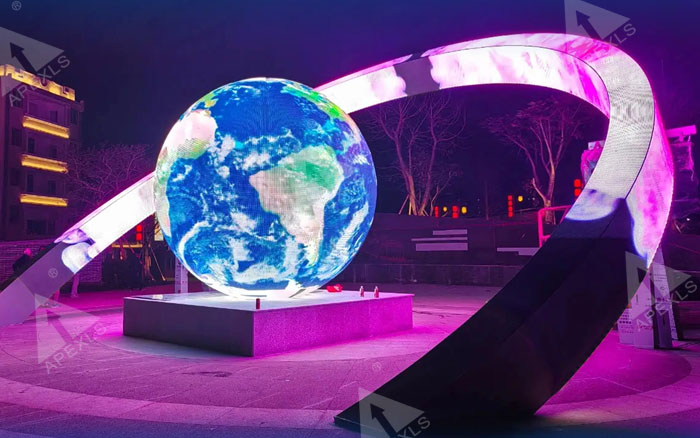
The true value of an LED display lies in its ability to break traditional flat display limitations. The spherical form creates an eye-catching and futuristic presence, ideal for commercial exhibitions, science museums, and tourism attractions. For instance, a spherical LED display placed in the atrium of a shopping mall offers continuous 360° visibility, ensuring every viewer experiences the same brightness and clarity. This enhances advertising efficiency and maximizes visual engagement.
In terms of scene adaptability, the LED spherical display integrates perfectly into multiple environments. It can function as a starry dome in cultural venues, a 3D data visualization globe in tech pavilions, or a creative prop in stage performances. Its dynamic visuals merge artistic appeal with technological sophistication, making it a centerpiece for immersive installations.
Furthermore, in terms of long-term application value, high-quality LED display modules feature advanced lamp beads and robust driver systems. These provide high brightness, vivid contrast, and long service life (up to 50,000 hours). Such durability ensures stable performance in both indoor and outdoor settings, reducing maintenance costs and improving operational efficiency for years to come.
Customization is the defining strength of LED display technology. With customized LED display solutions, manufacturers can adapt size, pixel pitch, and design aesthetics according to project demands.
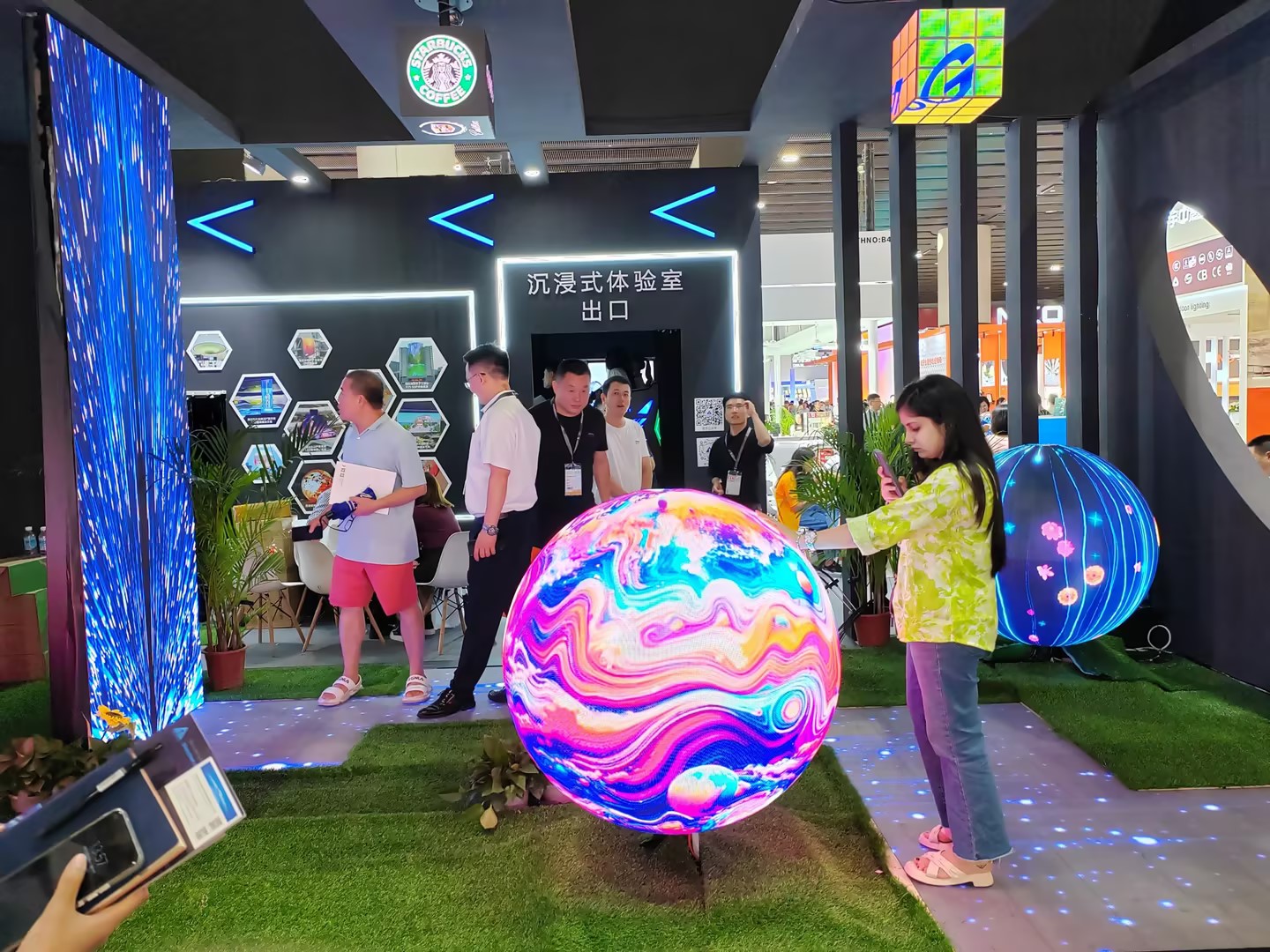
For indoor applications, small LED spherical displays (1–3 meters in diameter) with high pixel density (P2.5, P3) are preferred for close viewing. For outdoor environments, larger displays (up to 10 meters) with lower density (P6, P8) provide better visibility and cost balance.
Beyond visual quality, customization also extends to interactive features. LED spherical displays can include touch-sensitive surfaces, sound or motion sensors, and synchronization with other devices. For example, an interactive globe in a science museum allows users to trigger data projections through touch, while cultural installations can sync LED visuals with ambient music for a synchronized experience.
Aesthetic customization also matters. Shell materials can range from lightweight aluminum alloy to weather-resistant stainless steel, depending on installation environments. The installation method — suspended, floor-standing, or embedded — ensures the display integrates seamlessly into architectural structures, achieving both functional and aesthetic harmony.
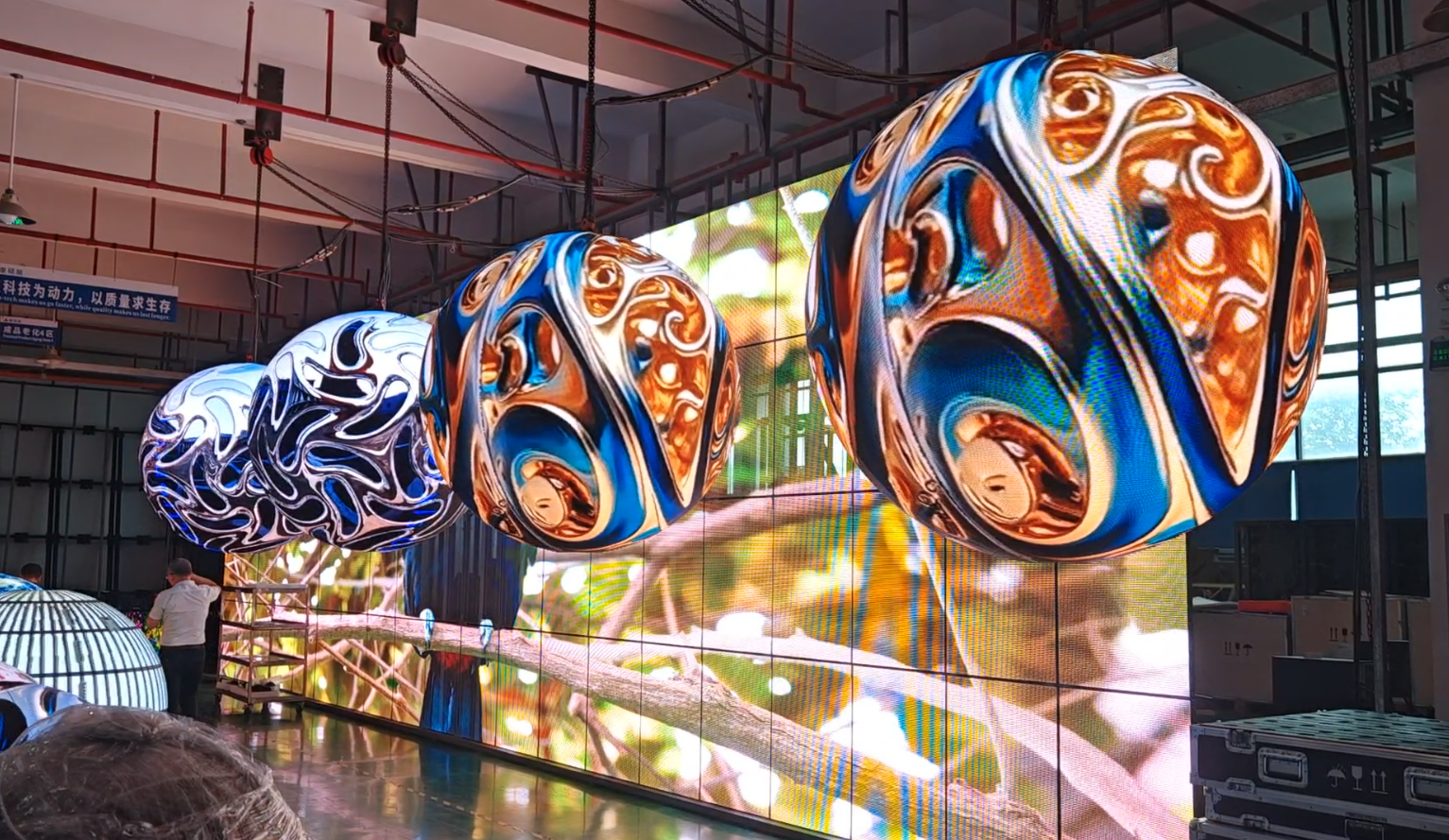
The 3D LED display technology used in spherical screens brings immersive experiences to life. The spherical curvature naturally enhances depth and dimensional realism compared to flat panels. High-refresh LED lamp beads (120Hz or above) ensure fluid visuals without flicker or lag, even during complex 3D animations.
Software innovation further drives 3D content creation. Through precise 3D modeling and spherical mapping algorithms, standard 2D videos can be transformed into stunning 3D LED display projections. For instance, a globe model can accurately map Earth’s geographic details, creating a vivid sense of rotation and depth. When multiple LED spheres are synchronized, they can create panoramic, multi-display 3D visual environments.
The LED display price is determined by several variables — hardware, customization, and service. Hardware accounts for the largest cost share, including LED lamp beads, control systems, and materials. Premium components such as imported LEDs or stainless-steel shells increase durability and visual quality but also raise costs by 20–50%.
Customization fees depend on the complexity of features and design — interactive systems, special content production, or high-altitude installations all add extra expenses. Exclusive 3D content, for instance, can cost several thousand dollars depending on animation complexity.
Service costs include logistics, professional installation, and post-sale maintenance. Reputable LED display manufacturers often provide 2–5 years of warranty, with on-site support to ensure long-term system stability.
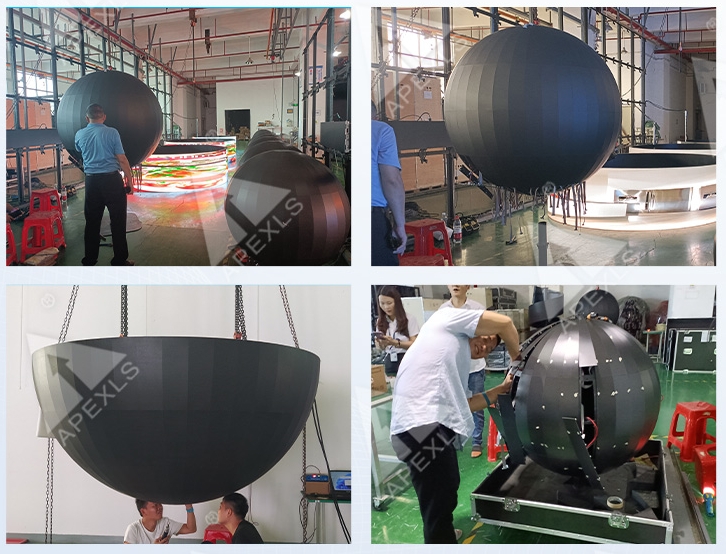
Selecting a trustworthy LED display manufacturer determines the overall project success. A professional supplier should possess in-house R&D capabilities, patented 3D rendering technologies, and complete production systems for quality assurance.
Additionally, past project experience and client reviews offer vital insight. Manufacturers with extensive experience in tourism, exhibition, and science projects are often more skilled at adapting LED display solutions to complex environments.
Reliable suppliers also provide one-stop LED display project implementation, covering design consultation, manufacturing, on-site installation, and after-sales services — preventing future maintenance risks.
A standard LED display project implementation follows six phases:
Requirement Analysis — Determine the installation site, function goals, and visual needs.
Design Proposal — Develop LED display specifications, structure design, and budget plan.
Manufacturing — Produce modules, assemble LED panels, and perform durability testing.
Installation & Debugging — Install screens, calibrate brightness and color uniformity, ensure system stability.
Acceptance & Delivery — Verify visual quality and operational safety before project handover.
After-Sales Service — Provide technical maintenance and periodic inspection for long-term stability.
A well-structured workflow guarantees timely delivery, cost control, and quality assurance — vital for large-scale LED display installations.
The LED spherical display represents more than a technological upgrade — it’s a fusion of art, data, and spatial design. From innovative 3D LED display technology to customized manufacturing and installation, it redefines how visual information is experienced.
By choosing a reliable LED display manufacturer and understanding the cost, design, and project structure, users can ensure successful, visually striking, and long-lasting display implementations. In an era where creativity meets technology, the LED display stands as the core medium transforming the visual experience.