A plain-English guide to the latest non Gamstop casinos UK 2026, covering offshore licences, no deposit bonuses, real brands, and what to check before you deposit. read the latest non Gamstop casino guide


In modern commercial marketing, LED displays have become the heart of information delivery and foot traffic attraction. Understanding classifications, scenarios, costs, and maintenance is essential for store owners to make informed investments. Apexls provides this deep dive across five key dimensions.
Choosing the right screen starts with understanding where and how it will be used.
Outdoor Screens: Defined by High Protection and High Brightness (3,000–6,000 nits). These are waterproof and dustproof, designed to remain visible under direct sunlight. Ideal for storefront headers and street-facing walls.
Indoor Screens: Focus on High Definition and Low Power. With lower brightness (800–1,500 nits) and finer pixel pitches (e.g., P2, P2.5), they offer crisp visuals for close-up viewing (1–5 meters) in showrooms or behind checkout counters.
Semi-outdoor Screens: Often used in window displays or under eaves. They offer moderate brightness (1,500–2,500 nits) and basic splash resistance to handle humidity without the bulk of full outdoor housing.
Single/Dual Color: Best for simple scrolling text like “Open” or “Flash Sale.” Cost-effective and low-maintenance for small pharmacies or convenience stores.
Full-Color (RGB): Supports high-def video and dynamic effects. Essential for flagship stores and showrooms looking to build brand prestige and showcase product details.
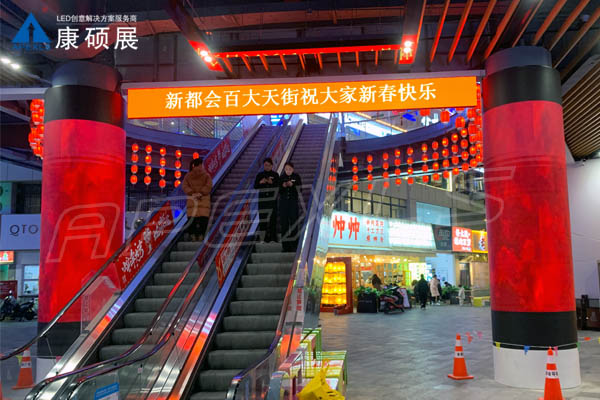
2. Application Scenarios: Maximizing Retail ROI
LED displays serve different strategic purposes depending on their placement within the store journey.
Storefront Attraction: High-impact outdoor screens loop brand videos or limited-time offers to capture the attention of passersby in busy shopping districts.
In-Store Navigation & Sales: Indoor small-pitch screens display product specs, tutorials, or social proof (reviews), helping customers make faster purchasing decisions.
Atmosphere Building: Seasonal themes (e.g., Christmas snow effects or Lunar New Year greetings) create an emotional connection and enhance the shopping environment.
Operational Efficiency: Small screens at checkout areas replace traditional paper posters for queue management, member rules, and real-time safety alerts.
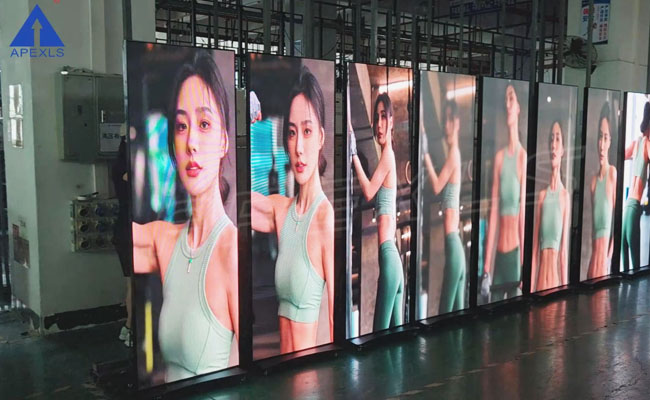
3. Pricing Guide: Balancing Cost and Performance
LED display pricing is dynamic, influenced by specifications and service levels.
Pixel Pitch & Size: The smaller the pitch (higher resolution) and the larger the area, the higher the cost. For example, an Outdoor P6 screen is significantly more expensive than an Outdoor P10 due to the density of LEDs.
Components & Hardware: Beyond the panel, budgets must include Control Cards ($10–$100+), Power Supplies, and Mounting Frames (approx. 10–20% of total equipment cost).
Installation & Labor: Standard wall mounts are affordable, while recessed or high-altitude installations require specialized rigging and safety equipment, increasing the total investment.
Professional setup and routine care can extend a screen’s lifespan to 5–8 years.
Structural Integrity: Wall-mounted store LED display screens must support at least 50kg/sqm.
Safety Standards: Use national-standard wiring to prevent short circuits. Outdoor units must include proper lightning protection and grounding.
Calibration: Post-installation, screens require color uniformity testing and “dead pixel” checks before final handover.
Cleaning: Use a soft cloth with water (avoid alcohol or harsh chemicals). Clean outdoor screens every 1–2 weeks and indoor screens every 2–3 weeks.
Technical Check-ups: Perform a professional inspection every 3–6 months to check for cable wear, power stability, and firmware updates.
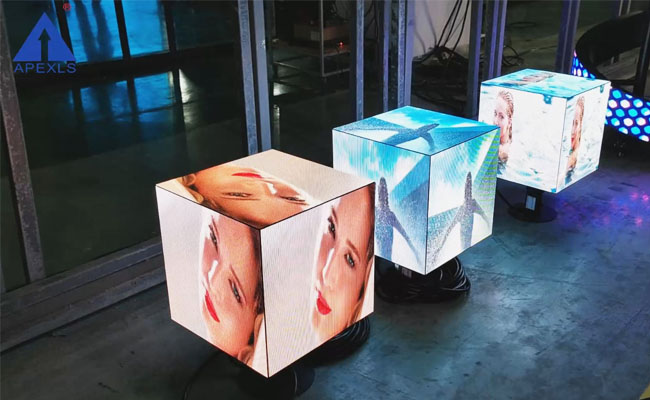
5. Future Trends: The Evolution of Retail Display
The industry is moving toward smarter, more integrated “Digital Marketing Ecosystems.”
Creative Form Factors: Transparent LED screens (70–90% transparency) are revolutionizing window displays, while Flexible/Curved screens allow for immersive pillar wraps and artistic installations.
Interactive Intelligence: Integration with AI Face Recognition and Touch Sensors allows screens to push personalized recommendations based on a customer’s age or gender.
Sustainability: New energy-saving chips and auto-brightness sensors can reduce power consumption by 30–50%, aligning with global green energy goals.