A plain-English guide to the latest non Gamstop casinos UK 2026, covering offshore licences, no deposit bonuses, real brands, and what to check before you deposit. read the latest non Gamstop casino guide


Circular LED displays are redefining outdoor advertising. Unlike traditional flat panels, circular designs offer 360-degree visibility, attracting attention from all angles. Businesses increasingly adopt these displays in public squares, retail environments, and high-traffic venues. However, outdoor operation presents unique challenges. Exposure to sunlight, dust, wind, and fluctuating temperatures impacts performance. Therefore, understanding heat dissipation, brightness management, and material durability is crucial for reliable long-term operation.
Outdoor environments expose LED modules to extreme conditions. Continuous sunlight can raise surface temperatures above 70°C, affecting both the LEDs and electronic components. Rain, humidity, and wind increase corrosion risk and create potential short circuits. Dust accumulation further reduces light efficiency and cooling effectiveness. Consequently, outdoor circular LED displays demand robust engineering that addresses these factors while maintaining consistent image quality and brightness.
Furthermore, the circular form introduces unique challenges compared to flat panels. Modules must curve precisely without affecting alignment. Structural rigidity must prevent bending or twisting. Heat generated at the core of the circle requires careful thermal management to avoid hot spots. If ignored, these issues can reduce lifespan, increase maintenance, and compromise visual performance.
Outdoor visibility requires higher luminance. Circular LED displays often employ high-brightness SMD or COB modules. Brightness levels typically exceed 5,000 nits, ensuring readability even under direct sunlight. Consistent luminance across the curved surface prevents visual distortion. Additionally, adaptive brightness sensors automatically adjust output based on ambient light, conserving energy while maintaining clarity. These features ensure the display remains impactful throughout the day, regardless of changing lighting conditions.
Heat dissipation is critical for outdoor circular LED performance. LEDs generate heat continuously during operation, and concentrated heat reduces efficiency. Manufacturers employ multiple strategies to maintain thermal stability:
Aluminum chassis and heat sinks: Efficiently transfer heat away from modules.
Active airflow systems: Fans or air ducts circulate air through the cabinet.
Natural convection design: Vented enclosures allow passive cooling.
Thermal interface materials: Conduct heat between LEDs and heat sinks to prevent hotspots.
These strategies maintain component temperatures within safe operating limits. Controlled heat prevents color shift, brightness decay, and premature failure. Designers often integrate thermal simulations during development to ensure the circular configuration supports uniform cooling.
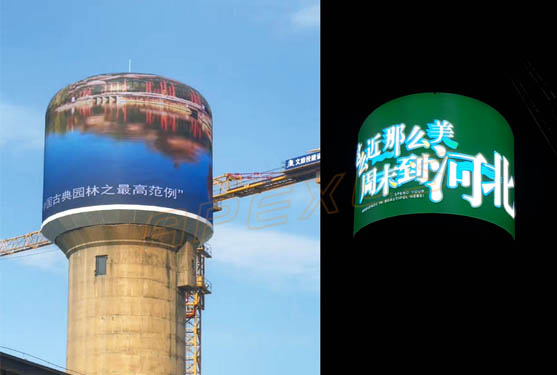
Outdoor circular LED displays require IP65 or higher protection. Waterproof coatings, sealed connectors, and corrosion-resistant materials prevent damage from rain and humidity. UV-resistant plastics reduce yellowing and fading under long-term sunlight exposure. Powder-coated aluminum cabinets resist wind and dust abrasion. These design features extend lifespan and reduce maintenance costs. Durable construction also supports public installations where environmental exposure is unavoidable.
Circular displays often consist of modular LED panels. Modular design simplifies maintenance, allowing technicians to replace individual sections without disassembling the entire display. Front-service or rear-service access options increase flexibility depending on installation location. This approach reduces downtime and maintenance complexity. Furthermore, modularity allows scaling of display size or curvature, adapting to various architectural constraints.
Curved geometry demands careful pixel pitch selection. Smaller pitch (P3–P6) ensures clear images at closer distances, ideal for pedestrian areas. Larger pitch (P8–P16) suits stadiums or plazas where viewers are farther away. Viewing angle optimization ensures uniform brightness across the circular surface. Sufficient horizontal and vertical angles prevent color distortion or dark spots. Proper design ensures the display remains visually effective for 360-degree viewing.
Outdoor displays often operate 12–24 hours daily. Energy-efficient power supplies and intelligent brightness controls reduce electricity costs. Advanced displays employ PWM control to balance brightness and power consumption. Efficient cooling strategies also reduce energy waste from fans or active airflow. Combining these approaches maintains optimal performance while minimizing operational expenses.
Circular LED displays support dynamic content delivery through advanced CMS platforms. These systems allow real-time updates, scheduling, and synchronization with multiple displays. Content can rotate, animate, or respond to audience interaction, maximizing engagement. Outdoor displays benefit from this flexibility, keeping messaging fresh and relevant. Reliable content management also ensures operational efficiency and reduces the risk of downtime due to misconfiguration.
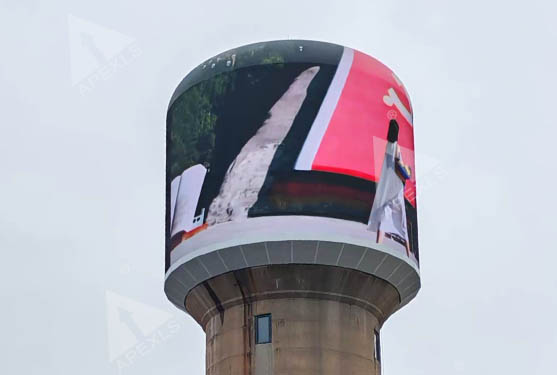
Retail plazas often install circular LED displays atop central structures, attracting foot traffic from multiple directions. Transportation hubs use these screens to provide schedules, advertisements, and public information simultaneously. Tourist attractions deploy 360-degree circular LED signage to deliver immersive visual experiences. Across applications, heat management, brightness, and durability remain critical to sustaining long-term performance. Successful projects demonstrate how engineering design, material selection, and thermal solutions converge to support demanding outdoor conditions.
Even with robust engineering, outdoor circular displays require preventive maintenance. Regular inspections remove dust and debris from airflow paths. Thermal paste or heat sinks may require replacement after extended periods. Connectivity checks ensure modular panels communicate effectively. Maintenance scheduling reduces unplanned downtime and prolongs component life. Well-planned service strategies balance operational availability and cost efficiency.
Circular advertising LED displays can operate efficiently outdoors when engineered for heat management, weather resistance, and high-brightness visibility. Modular design, thermal control, and durable materials ensure continuous performance. Proper pixel pitch, viewing angles, and energy efficiency enhance user experience. By addressing heat dissipation and environmental exposure systematically, these displays deliver reliable, 360-degree visual impact. Outdoor installations achieve long-term success when all components—LED modules, enclosures, cooling systems, and content management—function in harmony.