
In an era where commercial spaces face fierce competition, the Sphere LED display has emerged as a powerhouse for brand differentiation. Offering a high-impact, 360-degree visual experience, these “LED globes” transform ordinary venues into immersive landmarks. However, tailoring a solution requires more than just choosing a screen—it requires a strategic alignment of size, resolution, and environment.
The diameter of a creative LED ball screen dictates its visual gravity and installation feasibility.
Compact Displays (1-3m): Ideal for luxury retail storefronts and corporate showrooms, these units drive foot traffic through high-definition, close-range engagement.
Mid-Sized Displays (3-6m): The gold standard for shopping mall atriums and product launches, these screens act as a central “visual anchor” for large crowds.
Large-Scale Landmark Displays (6m+): Designed for stadiums, theme parks, and city landmarks, these massive installations provide a breathtaking, immersive experience.
For instance, a 5-meter sphere in a high-end shopping complex can become a viral “check-in” spot, while a 3-meter unit at an international auto show focuses the audience’s attention on intricate product details. Successful sphere LED display customization starts with precise site measurements, ensuring the structure complements the architectural load and sightlines.
Pixel density (P-value) is the primary driver of visual fidelity and project cost.
High-Density (P3, P4): Best for indoor environments where the audience is within 3-5 meters. These specifications are essential for displaying sharp text and vibrant product textures in jewelry stores or tech galleries.
Standard-Density (P6, P8): Optimized for long-distance viewing in outdoor squares or concert stages. These pitches provide fluid motion and high brightness while maintaining a cost-effective budget for large-scale surfaces.
A data-driven approach ensures you don’t overspend on resolution for a screen that will only be viewed from 50 meters away, nor compromise on quality for a high-traffic indoor boutique.
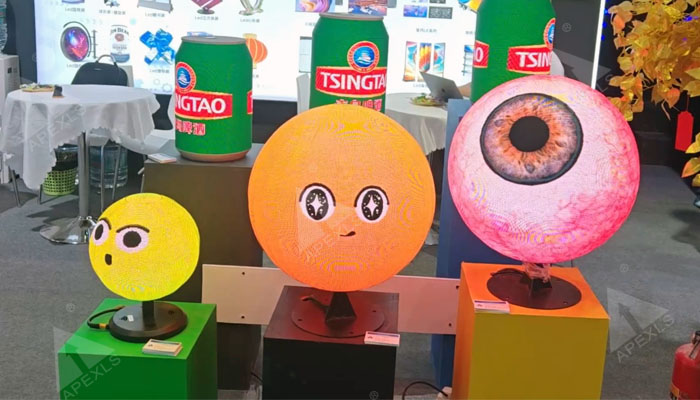
To ensure a seamless LED globe screen performs reliably, several technical benchmarks must be met:
Brightness & Weatherproofing: Outdoor spherical displays require a brightness of ≥5000 nits and an IP65 rating to remain vivid under direct sunlight and resilient against harsh weather.
Refresh Rate & Viewing Angle: A high refresh rate (≥3840Hz) is critical to prevent flickering during live broadcasts or social media filming. True 360-degree visibility ensures that every person in the room has an unobstructed view.
Smart Interactivity: Modern commercial projects often integrate AR projection or touch sensors, turning a passive screen into an interactive brand experience.
A professional customization process is a multi-stage journey involving 3D modeling, precision manufacturing, and long-term maintenance. High-end providers utilize precision curved-surface splicing technology to eliminate visual gaps, ensuring the globe appears as a single, continuous digital canvas.
Furthermore, post-installation support—including remote monitoring and preventative maintenance—is vital to ensure your digital landmark remains operational and efficient for years to come.
A custom Sphere LED display is not merely a piece of hardware; it is a fusion of art, technology, and marketing strategy. By meticulously selecting the right diameter and pixel pitch, businesses can turn a physical space into a digital destination. Experience the reliability of a seamless visual solution today and provide your commercial project with the guidance system it deserves.