
In modern design, LED technology expands beyond flat panels. Creative installations now demand immersive experiences that engage viewers visually and emotionally. Tree-shaped LED display screens offer an innovative solution. By combining modularity, flexible linear design, and artistic intent, these screens transform spaces into interactive, sustainable environments. They integrate structural creativity with technological performance, enabling designers to craft visually dynamic displays while promoting energy efficiency and material sustainability.
These installations respond to both aesthetic and functional needs. They combine high-resolution LED modules with flexible structures that mimic natural forms. Designers gain freedom to express narratives, brand identities, and artistic concepts. Beyond visual appeal, tree-shaped displays reduce energy consumption and utilize modular components, supporting long-term sustainability goals.
The concept of tree-shaped LED screens derives from biomimicry. Designers observe natural branching patterns to create modular frameworks. Each “branch” acts as an independent LED module, allowing flexible spatial arrangements. The modularity enables installation in diverse environments, from public plazas to corporate lobbies, without requiring extensive structural modifications.
Flexible linear modules bend to follow curved trajectories. This flexibility preserves uniform pixel alignment, ensuring consistent image quality. Modular nodes allow easy expansion or reconfiguration, adapting to changing design requirements. By mirroring natural growth patterns, these displays achieve a visually organic presence while remaining technologically precise.
High-quality LED modules support tree-shaped structures without compromising brightness or resolution. Advanced flexible PCB substrates maintain electrical continuity under bending stress. This ensures reliable performance even when modules form curved branches or irregular patterns.
Encapsulation materials provide optical clarity and environmental protection. Soft silicone layers absorb mechanical stress while preventing moisture ingress. Thermal management systems, including conductive adhesives and heat-dissipating backplanes, maintain stable LED temperature. This reduces brightness fluctuations and prolongs module lifespan.
The control system synchronizes modules seamlessly. Each branch communicates with the central controller, which manages pixel mapping, color calibration, and dynamic effects. Real-time adjustments compensate for curvature, ambient light, or proximity, ensuring consistent display quality across complex geometries.
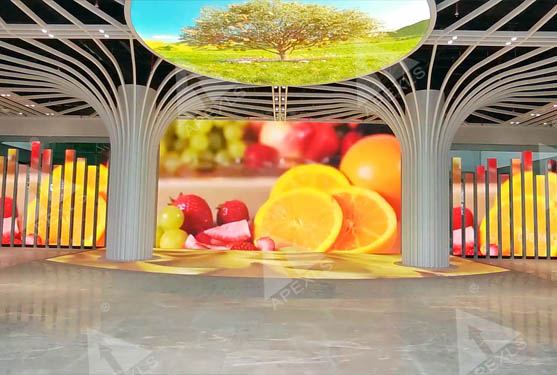
Tree-shaped LED displays enable immersive storytelling. Designers can map visuals along branches to simulate natural motion, flowing light, or seasonal transformations. Animated content can emulate sunlight filtering through leaves or digital blossoms blooming along the structure.
This spatially aware content design engages viewers physically and emotionally. The organic arrangement encourages audience interaction, enhancing experiential impact. Artists and brands benefit from the ability to combine digital art with physical form, creating installations that resonate deeply with users.
Energy conservation is a critical consideration in modern installations. Tree-shaped LED screens use high-efficiency SMD LEDs with low power consumption. Dynamic brightness control adjusts intensity according to ambient light, reducing unnecessary energy use.
Modular design supports component reuse and minimal waste. Damaged modules can be replaced individually, preventing the disposal of entire panels. Lightweight materials reduce structural demands, lowering transportation energy costs. Furthermore, advanced materials such as recycled polymers and eco-friendly encapsulants contribute to a reduced environmental footprint.
Sustainability also extends to heat management. Efficient thermal dissipation prevents overheating, which in turn lowers the energy demand for active cooling systems. This holistic approach ensures tree-shaped LED screens deliver high-impact visuals while adhering to environmentally responsible practices.
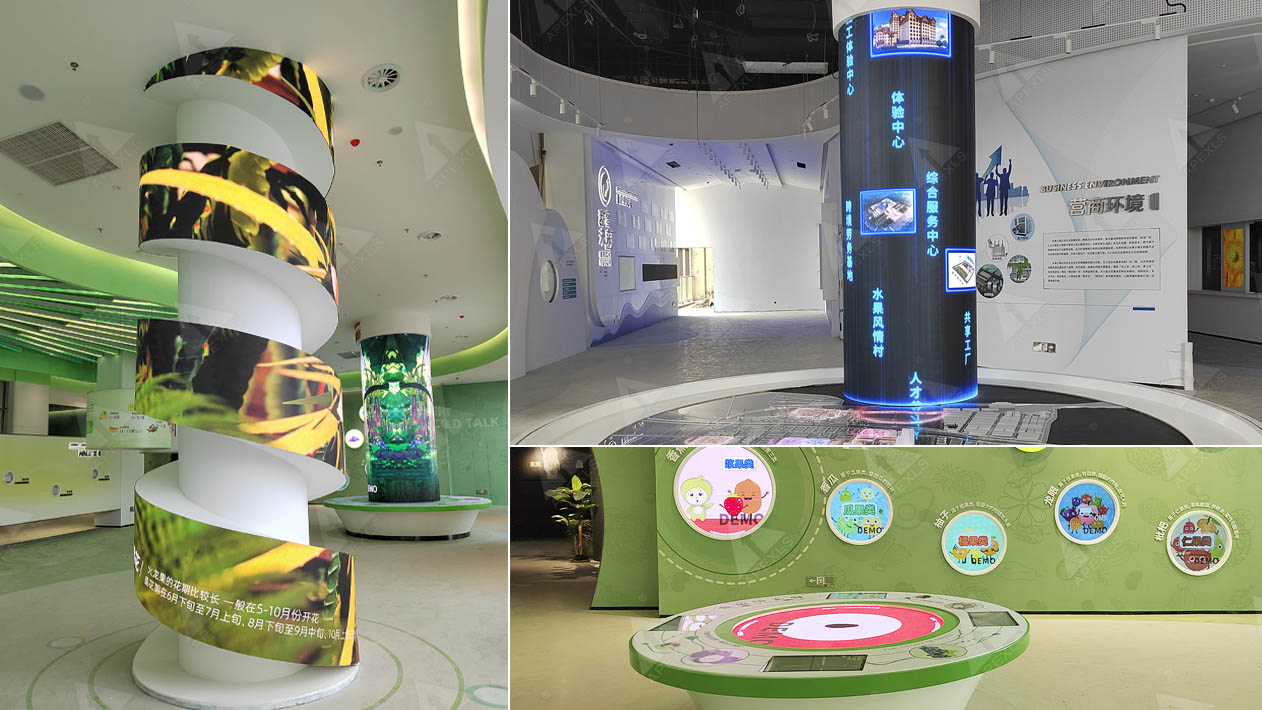
The installation process benefits from modular flexibility. Each branch attaches to a central hub, allowing rapid assembly without heavy scaffolding. Magnetic or snap-fit connectors reduce labor time and simplify maintenance.
Structural design absorbs mechanical stress. Branches are engineered to support both static weight and dynamic load caused by environmental vibration or user interaction. Reinforced joints maintain overall stability, ensuring that the display remains secure under long-term operation.
Safety considerations integrate seamlessly with design. Electrical insulation, grounded supports, and fire-retardant materials meet regulatory standards without compromising visual aesthetics. This balance between safety and design flexibility is a defining feature of tree-shaped LED installations.
Maintaining uniform color and brightness across curved surfaces is challenging. Optical lenses with wide viewing angles distribute light evenly, minimizing hot spots. Color calibration ensures each module matches neighboring branches, preserving seamless imagery.
Curvature compensation algorithms adjust pixel intensity and timing to prevent distortion. Even under irregular shapes, the system delivers stable contrast, sharpness, and motion clarity. This precision allows installations to function in high-profile commercial, cultural, and public environments without visual compromise.
Tree-shaped LED screens simplify maintenance through modular access. Technicians can remove individual branches or replace specific modules without dismantling the entire structure. This reduces downtime and operational costs.
Durable materials and reinforced connections protect against wear from vibration, dust, or environmental exposure. Silicone encapsulation resists UV degradation, while thermal management maintains LED efficacy. The combination of durability and modularity ensures these installations remain visually striking for years.
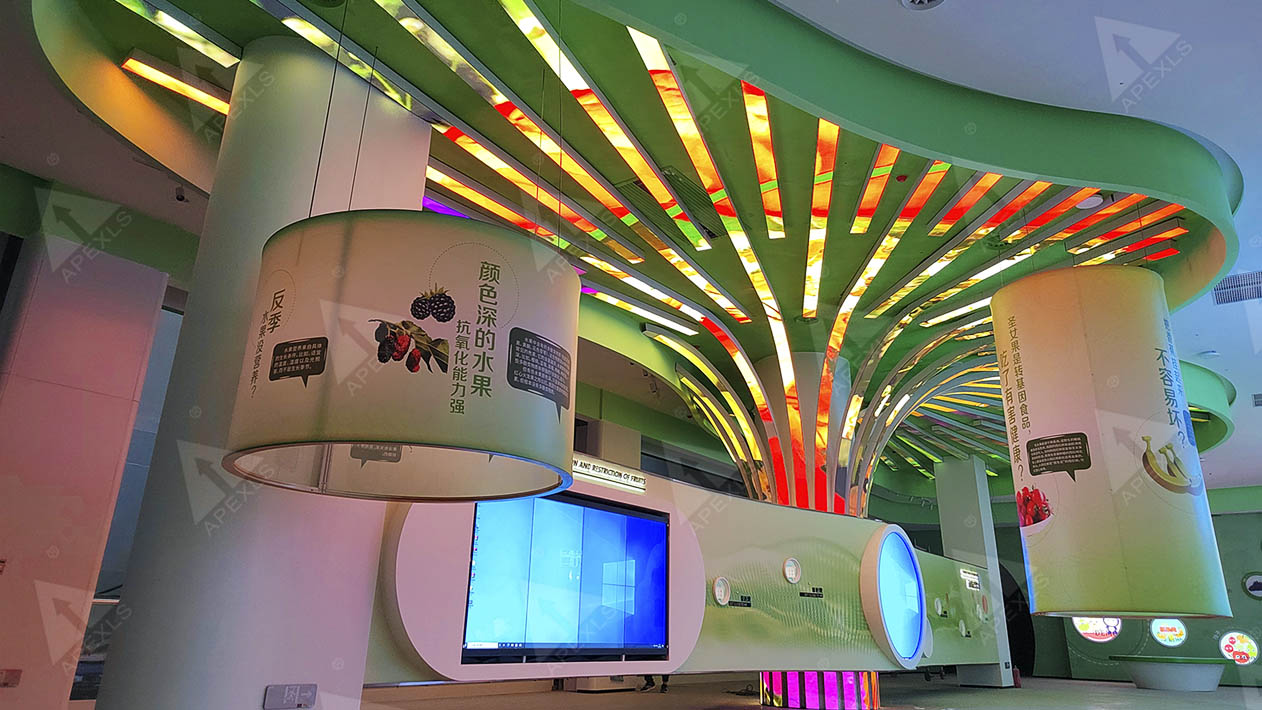
Tree-shaped LED installations serve diverse contexts. Retail environments use them to enhance brand identity and attract foot traffic. Cultural institutions incorporate them for dynamic art exhibitions and interactive displays. Corporate spaces employ them to convey innovation and creativity.
Event designers leverage the modular branches to craft immersive stages. Public spaces adopt tree-shaped screens for informational signage, decorative elements, and environmental storytelling. Each application benefits from the interplay of flexibility, optical precision, and sustainability inherent in the design.
Tree-shaped LED display screens represent a fusion of art, technology, and sustainability. Modular, flexible structures enable organic, visually immersive experiences. Advanced LED modules maintain brightness, color accuracy, and thermal stability even under complex shapes. Intelligent control systems synchronize dynamic content across branches, creating emotionally engaging installations.
Moreover, energy efficiency, reusable components, and eco-friendly materials ensure environmental responsibility. Structural design balances flexibility with stability, simplifying installation and maintenance. The combination of these factors allows designers to integrate creativity with functional performance.
Ultimately, tree-shaped LED display screens redefine possibilities in architectural, retail, cultural, and corporate spaces. They demonstrate that innovative modular design can deliver high-impact visuals while respecting both technological limits and environmental sustainability. As LED technology evolves, these installations will continue to expand the boundaries of creative expression and spatial storytelling.