
Pixel pitch primarily drives the cost of an indoor sphere LED display. Smaller “P” values require more LEDs per square meter. Consequently, manufacturing complexity and component costs rise significantly.
Estimated 2025 Market Price Ranges:
P2 Model: 15,000 – 18,000 RMB/㎡
P2.5 Model: 12,000 – 15,000 RMB/㎡
P3 Model: 8,000 – 12,000 RMB/㎡
Technical Comparison: P2 vs. P2.5 vs. P3
To find the best ROI, you must match display performance with your specific environment.
| Feature | P2 Sphere LED | P2.5 Sphere LED | P3 Sphere LED |
| Pixel Density | 250,000 dots/㎡ | 160,000 dots/㎡ | 111,111 dots/㎡ |
| Best Viewing Distance | 2 – 8 meters | 4 – 20 meters | > 5 meters |
| Power Consumption | ~320W/㎡ | ~300W/㎡ | ~280W/㎡ |
| Clarity Level | 1080P Ultra-HD | Standard High-Def | Atmosphere/Dynamic |
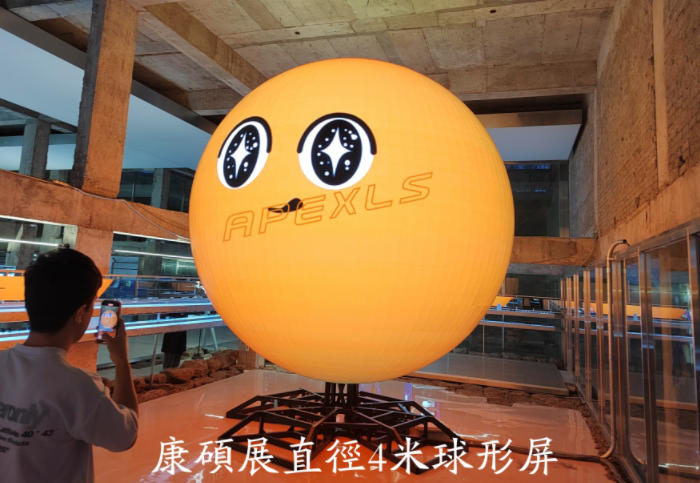
Choose the P2 indoor sphere LED display for close-up viewing. Science museums and corporate showrooms benefit most from its 250,000 pixels. While it costs more, it delivers unmatched detail for immersive experiences.
The P2.5 model is currently the best-seller. It offers high-quality visuals for shopping mall atriums. Furthermore, it costs roughly 3,000 RMB/㎡ less than the P2. This model balances clarity and budget perfectly for most projects.
Select the P3 model for large spheres or long-distance viewing. It excels in banquet halls and public squares. Because viewers stand further away, the lower pixel density remains unnoticeable. Additionally, it features the lowest maintenance costs.
Procurement involves more than just the screen price. For instance, P2 screens require more expensive video processors. Also, installation labor for spherical displays is 20-30% higher than for flat screens. You must account for these factors to avoid budget overruns.
Apexls recommends selecting your indoor sphere LED display based on the primary viewing distance. If you need a high-tech centerpiece, our team provides customized solutions for any diameter.