

1. What Is a CAVE Immersive LED Display System?
A CAVE (Cave Automatic Virtual Environment) is a multi-sided projection or display-based immersive virtual reality system, typically consisting of 3, 4, or even 5 walls (including the floor). These surfaces enclose the user, creating a visually “wrapped” experience.
Traditional CAVE systems rely on rear or front projection. A CAVE immersive LED display, by contrast, replaces projection-based fusion walls with high-resolution LED modules, forming a seamless, high-brightness, high-contrast, and interactive immersive visual space.
In simple terms: the user stands inside a “box” made of LED screens and, with 3D glasses (optional) and interactive devices, experiences a highly realistic virtual environment.
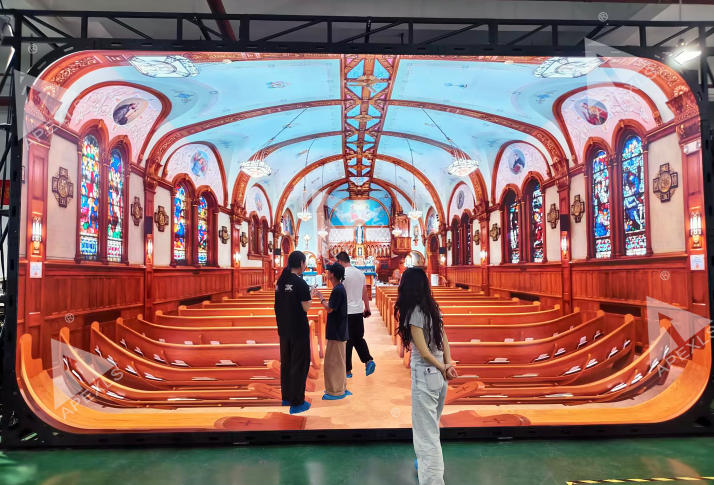
Apexls P2 CAVE Immersive LED Display
2. How It Works – The Technical Principles
2.1 Multi-Sided LED Tiling
Small-pitch LED modules (typically P1.2–P2.5) are used to build left, right, front, floor, and sometimes ceiling surfaces. The extremely small gaps between modules create a virtually seamless display.
2.2 Stereoscopic Vision & Viewing Angle Tracking
Using active or passive 3D technology, the system calculates left-eye and right-eye images in real time based on the user’s head position. Combined with infrared or optical motion capture, it delivers perspective-correct visuals.
2.3 Real-Time Rendering & Synchronized Driving
Multiple high-performance GPUs or distributed rendering systems drive the display. Frame and image synchronization ensures perfect spatial and temporal alignment across all LED surfaces.
2.4 Interactive Integration
With handheld controllers, data gloves, motion capture, or laser tracking systems, user actions within the space trigger real-time visual responses – creating a closed-loop interactive experience.
3. Key Advantages Over Traditional Projection-Based CAVE & Standard Large Displays
Aspect Traditional Projection CAVE CAVE Immersive LED Display
Brightness Low (ambient light sensitive) High (>800 nits)
Contrast Ratio Limited Excellent (true black levels)
Seams No physical seams, but blending zones present Minimal physical seams, near-seamless
Lifespan Limited (lamp/LEDsource decay) Extremely long (≥100,000 hours)
Ambient Light Tolerance Poor Strong
Maintenance Cost High (frequent blending calibration) Relatively low
Image Uniformity Difficult to maintain across projectors High uniformity with matched LED batches

Immersive outdoor camping and “roasting a fire”
4. Typical Industry Applications
4.1 Research & Higher Education
Virtual simulation laboratories
Psychology and human factors research
Architecture and urban planning visualization
4.2 Industrial & Manufacturing
Digital mockup reviews
Virtual assembly and process validation
Factory planning and safety simulations
4.3 Exhibitions & Corporate Showrooms
Brand immersive experience centers
Product launch virtual spaces
Corporate culture digital exhibition halls
4.4 Defense & Emergency Training
Battlefield environment simulation
Command and decision-making exercises
Emergency response and disaster drills
4.5 Digital Twins & Smart Cities
City-scale data visualization
Transportation and energy situational awareness
Remote collaborative decision-making
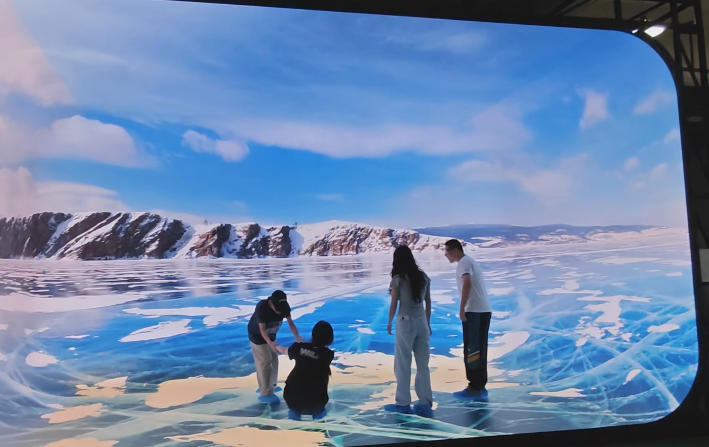
Multi-person immersive scene experience
5. Key Considerations When Selecting a System
If you are evaluating a CAVE immersive LED display system, consider the following:
LED Pixel Pitch – Choose based on minimum viewing distance (typically P1.5–P2.5)
3D Support – Verify the maturity of active 3D LED solutions
Rendering Power – Multi-sided, high-resolution output demands significant GPU resources
Interaction Integration – Ensure low-latency alignment between tracking systems and LED displays
Heat Dissipation & Maintenance Access – Enclosed spaces require proper cooling and rear-service access
6. Conclusion
The CAVE immersive LED display system represents a major evolution in virtual reality display technology – moving from the era of projection fusion to direct-view LED. It solves the persistent pain points of traditional CAVE systems, including low brightness, frequent maintenance, and imperfect blending zones.
For high-stakes applications in industry, research, and premium exhibition environments that demand high image quality, reliable operation, and lower long-term maintenance costs, the CAVE immersive LED display is a path worth serious consideration.