

Interactive LED technology blends visual innovation with user engagement. These systems create unique experiences through advanced sensors and creative designs. Apexls provides high-end interactive solutions for global markets.
Capacitive Touch LED Screens detect human electrical currents. Consequently, they offer rapid response and precise multi-touch capabilities. These screens suit high-end commercial displays or educational settings perfectly.
Infrared Touch LED Screens use light beam interruption to track movement. Therefore, they provide a cost-effective and stable solution. Most shopping malls and meeting rooms utilize this reliable technology today.
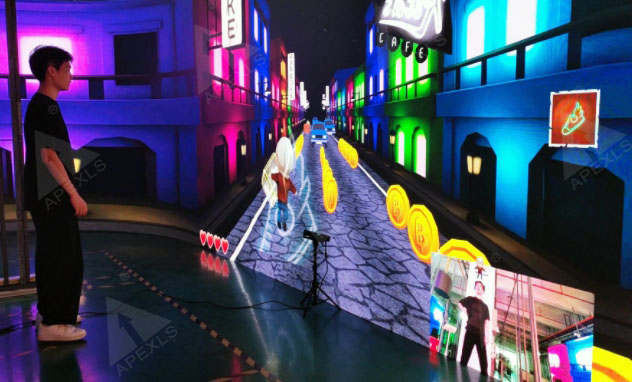
Camera-Based Systems capture body movements through image recognition. As a result, users enjoy a natural and intuitive interface. This technology excels in gaming, entertainment, and immersive advertising.
Sensor-Based Systems utilize accelerometers or gyroscopes. Usually, users wear specific devices to enhance the experience. This setup creates immersive virtual scenes for theme parks and specialized projects.
Built-in sensors identify specific voice commands immediately. Thus, users control playback or trigger content through speech. These displays offer a seamless “hands-free” experience for smart showrooms and boardrooms.
The system relies on several core components:
LED Modules: These units determine brightness and color accuracy.
Advanced Sensors: They capture touch, motion, or sound data accurately.
High-Speed Controllers: These processors manage signals and display content.
Communication Modules: They facilitate data transfer via Wi-Fi or Ethernet.
Stable Power Units: These ensure consistent performance for the entire screen.
Operating System: Android or Windows provides the basic environment.
Interactive Software: Custom algorithms process touch or motion data.
Content Management: This system allows users to update visuals easily.
3. Data Processing and Transmission
First, sensors collect raw user data or environmental signals. Next, the controller analyzes this data using preset logic. Finally, the system executes the command through the communication module. This process happens in milliseconds to ensure smooth interaction.
Interactive LED displays include touch, motion, and voice-controlled categories. These functions rely on precision hardware and smart software. Apexls continues to deliver vivid, personalized display effects for diverse industries worldwide.